MISS WORLD


The Miss World pageant is the oldest surviving major international beauty pageant. It was created in the United Kingdom by Eric Morley in 1951. Since his death in 2000, Morley's wife, Julia Morley, co-chairs the pageant. Alongside its rival Miss Universe and Miss Earth contests, this pageant is one of the most publicised beauty contests in the world. The telecast of the final competition is the world's largest live annual beauty pageant television event with global viewers. The winner spends a year travelling to represent the Miss World Organization and its various causes.[6] Traditionally, Miss World lives in London during her reign. The current Miss World is Ksenia Sukhinova of Russia.

History

Miss World started as the Festival Bikini Contest, in honour of the recently introduced swim wear of the time, but was called "Miss World" by the media. It was originally planned as a one-off event. Upon learning about the upcoming Miss Universe pageant, Morley decided to make the pageant an annual event. Opposition to the wearing of bikinis led to their replacement with more modest swim wear after the first contest. In 1959, the BBC started broadcasting the competition. The pageant's popularity grew with the advent of television. In the 1980s, the pageant repositioned itself with the slogan Beauty With a Purpose, with added tests of intelligence and personality. However, the competition has been seen as old-fashioned and rather politically incorrect in its native Britain. Despite the global appeal, the show was not broadcast on any major terrestrial British TV network for several years, until Channel 5 aired it in 1998. 21st Century Zhang Zilin, Miss World 2007 Eric Morley died as the pageant entered the new century. His wife, Julia, succeeded as chairwoman of the Miss World Organization. The century saw its first black African winner, Agbani Darego, in 2001. As part of its marketing strategy, Miss World came up with a "You Decide" television special during that edition, featuring the delegates behind the scenes and on the beach, and allowing viewers to either phone in or vote online for their favorites. It also sells its Talent, Beach Beauty and Sports events as television specials to broadcasters. In 2002 the pageant was slated for choosing Abuja, the capital city of Nigeria to host its final. This choice was controversial, as a northern Nigerian woman, Amina Lawal, was awaiting death by stoning for adultery under Sharia law there, but Miss World chose to use the publicity surrounding its presence to bring greater global awareness and action to Amina's plight

The Pageant

In the year preceding the global finals, each delegate must win her national title or a specially designated Miss World national preliminary. Miss World's national preliminaries are conducted by their licence-holders, who hold the franchise to use the "Miss World" name in their country. The annual final is typically a month long event, with several preliminary galas, dinners, balls and activities, culminating in a globally telecast final show in which the field is narrowed to between 15-20 delegates. Since 2003 Miss World pageant also features Fast Track events during the preliminary round. The winners of Fast Track events are automatically qualified to enter the final round. Fast Track events which have been used since 2003 are: * Beach Beauty (2003-present) * Miss Talent (2003-present) * Miss Sports (2003-present) * Beauty With A Purpose (2005-present) * Top Model (2004, 2007-present) * People's Choice (2003) * Personality (2003) * Contestant's Choice (2004)


DREAMWEAVER


Dreamweaver (formerly Macromedia Dreamweaver) is a web development application originally created by Macromedia, and is now developed by Adobe Systems, which acquired Macromedia in 2005. Dreamweaver is available for both Mac and Windows operating systems. Recent versions have incorporated support for web technologies such as CSS, JavaScript, and various server-side scripting languages and frameworks including ASP, ColdFusion, and PHP.

Features

Although a hybrid WYSIWYG and code-based web design and development application, Dreamweaver's WYSIWYG mode can hide the HTML code details of pages from the user, making it possible for non-coders to create web pages and sites. One criticism of this approach is that it has the potential to produce HTML pages whose file size and amount of HTML code is larger than an optimally hand-coded page would be, which can cause web browsers to perform poorly. This can be particularly true because the application makes it very easy to create table-based layouts. Some web site developers criticized Dreamweaver for producing code that often did not comply with W3C standards, though recent versions have been more compliant. Dreamweaver 8.0 performed poorly on the Acid2 Test, developed by the Web Standards Project. Adobe has focused on support for standards-based layout in recent and current versions of the application, including the ability to convert tables to layers.

Dreamweaver allows users to preview websites in locally-installed web browsers. It also has site management tools such as FTP/SFTP and WebDAV file transfer and synchronization features, the ability to find and replace lines of text or code by search terms and regular expressions across the entire site, and a templating feature that allows single-source update of shared code and layout across entire sites without server-side includes or scripting. The behaviours panel also enables use of basic JavaScript without any coding knowledge, and integration with Adobe's Spry AJAX framework offers easy access to dynamically-generated content and interfaces.

Dreamweaver can use third-party "Extensions" to extend core functionality of the application, which any web developer can write (largely in HTML and JavaScript). Dreamweaver is supported by a large community of extension developers who make extensions available (both commercial and free) for most web development tasks from simple rollover effects to full-featured shopping carts.

Dreamweaver, like other HTML editors, edits files locally then uploads them to the remote web server using FTP, SFTP, or WebDAV. Dreamweaver CS4 now supports the Subversion (SVN) version control system.

Syntax highlighting

As of version 6, Dreamweaver supports syntax highlighting for the following languages out of the box:

* ActionScript
* Active Server Pages (ASP).
* ASP.NET
* C#
* Cascading Style Sheets (CSS)
* ColdFusion
* EDML
* Extensible HyperText Markup Language (XHTML)
* Extensible Markup Language (XML)
* Extensible Stylesheet Language Transformations (XSLT)
* HyperText Markup Language (HTML)
* Java
* JavaScript
* JavaServer Pages (JSP)
* PHP: Hypertext Preprocessor (PHP)
* Visual Basic (VB)
* Visual Basic Script Edition (VBScript)
* Wireless Markup Language (WML)

It is also possible to add your own language syntax highlighting to its repertoire.

In addition, code completion is available for many of these languages.

PHOTOSHOP

Adobe Photoshop, or simply Photoshop, is a graphics editing program developed and published by Adobe Systems. It is the current market leader for commercial bitmap and image manipulation software, and is the flagship product of Adobe Systems. It has been described as "an industry standard for graphics professionals" and was one of the early "killer applications" on the Macintosh, later also for the PC. Adobe's 2005 "Creative Suite" rebranding led to Adobe Photoshop 8's renaming to Adobe Photoshop CS. Thus, Adobe Photoshop CS4 is the 11th major release of Adobe Photoshop. The CS rebranding also resulted in Adobe offering numerous software packages containing multiple Adobe programs for a reduced price. Adobe Photoshop is included in most of Adobe's Creative Suite offerings. Photoshop's popularity, combined with its high retail price, makes Photoshop's piracy rate relatively high. Adobe countered by including SafeCast DRM starting with Adobe Photoshop CS.

Development

Early history

In 1987, Thomas Knoll, a PhD student at the University of Michigan, began writing a program on his Macintosh Plus to display grayscale images on a monochrome display. This program, called Display, caught the attention of his brother John Knoll, an Industrial Light & Magic employee, who recommended Thomas turn it into a full-fledged image editing program. Thomas took a six month break from his studies in 1988 to collaborate with his brother on the program, which had been renamed ImagePro. Later that year, Thomas renamed his program Photoshop and worked out a short-term deal with scanner manufacturer Barneyscan to distribute copies of the program with a slide scanner; a "total of about 200 copies of Photoshop were shipped" this way. During this time, John traveled to Silicon Valley and gave a demonstration of the program to engineers at Apple Computer Inc. and Russell Brown, art director at Adobe. Both showings were successful, and Adobe decided to purchase the license to distribute in September 1988.While John worked on plug-ins in California, Thomas remained in Ann Arbor writing program code. Photoshop 1.0 was released in 1990 for Macintosh exclusively.


Photoshop has strong ties with other Adobe software for media editing, animation, and authoring. The .PSD (Photoshop Document), Photoshop's native format, stores an image with support for most imaging options available in Photoshop. These include layers with masks, color spaces, ICC profiles, transparency, text, alpha channels and spot colors, clipping paths, and duotone settings. This is in contrast to many other file formats (e.g. .EPS or .GIF) that restrict content to provide streamlined, predictable functionality. Photoshop's popularity means that the .PSD format is widely used, and it is supported to some extent by most competing software. The .PSD file format can be exported to and from Adobe Illustrator, Adobe Premiere Pro, and After Effects, to make professional standard DVDs and provide non-linear editing and special effects services, such as backgrounds, textures, and so on, for television, film, and the Web. Photoshop is a pixel-based image editor, unlike Adobe Illustrator or CorelDraw, which is a vector-based image editor. Photoshop can utilize the color models RGB, lab, CMYK, grayscale, binary bitmap, and duotone. Photoshop has the ability to read and write raster and vector image formats such as .EPS, .PNG, .GIF, .JPEG, and Adobe Fireworks.
Photoshop CS3
is marketed with three main components of improvement over previous versions: "Work more productively, edit with unrivalled power, and composite with breakthrough tools."[7] New features propagating productivity include streamlined interface, improved Camera Raw, better control over print options, enhanced PDF support, and better management with Adobe Bridge. Editing tools new to CS3 are the Clone Source palette and nondestructive Smart Filters, and other features such as the Brightness/Contrast adjustment and Vanishing Point module were enhanced. The Black and White adjustment option improves users control over manual grayscale conversions with a dialog box similar to that of Channel Mixer. Compositing is assisted with Photoshop's new Quick Selection and Refine Edge tools and improved image stitching technology. CS3 Extended contains all features of CS3 plus tools for editing and importing some 3D graphics file formats, enhancing video, and comprehensive image analysis tools, utilizing MATLAB integration and DICOM file support.

Photoshop CS4
features additions such as the ability to paint directly on 3D models, wrap 2D images around 3D shapes, convert gradient maps to 3D objects, add depth to layers and text, get print-quality output with the new ray-tracing rendering engine, and enjoy exporting to supported common 3D formats; the new Adjustment and Mask Panels; Content-aware scaling (also known as seam carving[9]); Fluid Canvas Rotation and File display options.[10] On 30 April, Adobe released Photoshop CS4 Extended, which includes all the same features of Adobe Photoshop CS4 with the addition of capabilities for scientific imaging, 3D, and high end film and video users. The successor to Photoshop CS3, Photoshop CS4 is the first 64-bit Photoshop on consumer computers (only on Windows – the OS X version is still 32-bit only.)

MOBILE PHONE


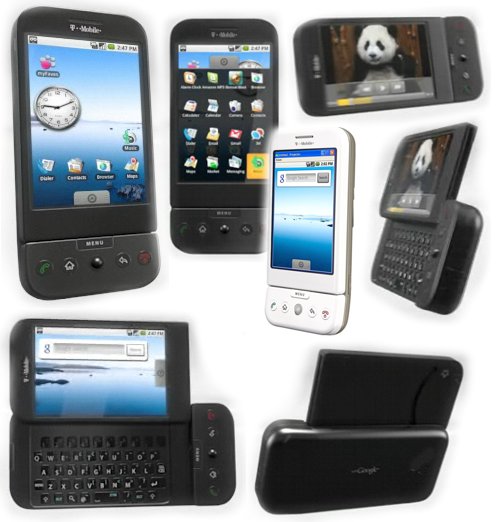
mobile phone or mobile (also called cellphone and handphone, as well as cell phone, wireless phone, cellular phone, cellular device, cell, cellular telephone, mobile telephone or cell telephone) is a long-range, electronic device used for mobile telecommunications (mobile telephony, text messaging or data transmission) over a cellular network of specialized base stations known as cell sites.

Most current cell phones connect to a cellular network consisting of switching points and base stations (cell sites) owned by a mobile network operator (the exception is satellite phones, which are mobile but not cellular). In addition to the standard voice function, current mobile phones may support many additional services, and accessories, such as SMS for text messaging, email, packet switching for access to the Internet, gaming, Bluetooth, infrared, camera with video recorder and MMS for sending and receiving photos and video, MP3 player, radio and GPS.

As opposed to a radio telephone, a cell phone offers full duplex communication, automatised calling to and paging from a public switched telephone network (PSTN), and handoff (American English)/handover (British/European English) during a phone call when the user moves from one cell (base station coverage area) to another. A mobile phone offers wide area service, and should not be confused with a cordless telephone, which also is a wireless phone, but only offer telephony service within a limited range, e.g. within a home or an office, through a fixed line and a base station owned by the subscriber.

The International Telecommunication Union estimated that mobile cellular subscriptions worldwide would reach approximately 4.1 billion by the end of 2008.[2] Mobile phones have gained increased importance in the sector of Information and communication technologies for development in the 2000s and have effectively started to reach the bottom of the economic pyramid.

History

U.S. Patent 887,357 for a wireless telephone was issued in to Nathan B. Stubblefield of Murray, Kentucky. He applied this patent to "cave radio" telephones and not directly to cellular telephony as the term is currently understood.Cells for mobile phone base stations were invented in 1947 by Bell Labs engineers at AT&T and further developed by Bell Labs during the 1960s. Radiophones have a long and varied history going back to Reginald Fessenden's invention and shore-to-ship demonstration of radio telephony, through the Second World War with military use of radio telephony links and civil services in the 1950s, while hand-held cellular radio devices have been available since 1973. A patent for the first wireless phone as we know today was issued in US Patent Number 3,449,750 to George Sweigert of Euclid, Ohio on June 10, 1969.

In 1945, the zero generation (0G) of cell telephones was introduced. Like other technologies of the time, it involved a single, powerful base station covering a wide area, and each telephone would effectively monopolize a channel over that whole area while in use. The concepts of frequency reuse and handoff, as well as a number of other concepts that formed the basis of modern cell phone technology, were described in the 1970s; see for example Fluhr and Nussbaum,[5] Hachenburg et al.and U.S. Patent 4,152,647, issued May 1, 1979 to Charles A. Gladden and Martin H. Parelman, both of Las Vegas, Nevada and assigned by them to the United States Government.

Martin Cooper, a Motorola researcher and executive is widely considered to be the inventor of the first practical mobile phone for hand-held use in a non-vehicle setting. Cooper is the first inventor named on "Radio telephone system" filed on October 17, 1973 with the US Patent Office and later issued as US Patent 3,906,166;[7] other named contributors on the patent included Cooper's boss, John F. Mitchell, Motorola's chief of portable communication products, who successfully pushed Motorola to develop wireless communication products that would be small enough to use outside the home, office or automobile and participated in the design of the cellular phone.Using a modern, if somewhat heavy portable handset, Cooper made the first call on a hand-held mobile phone on April 3, 1973 to a rival, Dr. Joel S. Engel of Bell Labs.

The first commercial citywide cellular network was launched in Japan by NTT in 1979. Fully automatic cellular networks were first introduced in the early to mid 1980s (the 1G generation). The Nordic Mobile Telephone (NMT) system went online in Denmark, Finland, Norway and Sweden in 1981.
In 1983, Motorola DynaTAC was the first approved mobile phone by FCC in the United States. In 1984, Bell Labs developed modern commercial cellular technology (based, to a large extent, on the Gladden, Parelman Patent), which employed multiple, centrally controlled base stations (cell sites), each providing service to a small area (a cell). The cell sites would be set up such that cells partially overlapped. In a cellular system, a signal between a base station (cell site) and a terminal (phone) only need be strong enough to reach between the two, so the same channel can be used simultaneously for separate conversations in different cells.

Cellular systems required several leaps of technology, including handover, which allowed a conversation to continue as a mobile phone traveled from cell to cell. This system included variable transmission power in both the base stations and the telephones (controlled by the base stations), which allowed range and cell size to vary. As the system expanded and neared capacity, the ability to reduce transmission power allowed new cells to be added, resulting in more, smaller cells and thus more capacity. The evidence of this growth can still be seen in the many older, tall cell site towers with no antennae on the upper parts of their towers. These sites originally created large cells, and so had their antennae mounted atop high towers; the towers were designed so that as the system expanded—and cell sizes shrank—the antennae could be lowered on their original masts to reduce range.
A 1991 GSM mobile phone

The first "modern" network technology on digital 2G (second generation) cellular technology was launched by Radiolinja (now part of Elisa Group) in 1991 in Finland on the GSM standard which also marked the introduction of competition in mobile telecoms when Radiolinja challenged incumbent Telecom Finland (now part of TeliaSonera) who ran a 1G NMT network.

The first data services appeared on mobile phones starting with person-to-person SMS text messaging in Finland in 1993. First trial payments using a mobile phone to pay for a Coca Cola vending machine were set in Finland in 1998. The first commercial payments were mobile parking trialled in Sweden but first commercially launched in Norway in 1999. The first commercial payment system to mimic banks and credit cards was launched in the Philippines in 1999 simultaneously by mobile operators Globe and Smart. The first content sold to mobile phones was the ringing tone, first launched in 1998 in Finland. The first full internet service on mobile phones was i-Mode introduced by NTT DoCoMo in Japan in 1999.

In 2001 the first commercial launch of 3G (Third Generation) was again in Japan by NTT DoCoMo on the WCDMA standard.

Until the early 1990s, following introduction of the Motorola MicroTAC, most mobile phones were too large to be carried in a jacket pocket, so they were typically installed in vehicles as car phones. With the miniaturization of digital components and the development of more sophisticated batteries, mobile phones have become smaller and lighter.
BUDDHISM


Buddhism, as traditionally conceived, is a path of salvation attained through insight into the ultimate nature of reality.It encompasses a variety of traditions, beliefs and practices, largely based on teachings attributed to Siddhartha Gautama, commonly known as the Buddha (Pali/Sanskrit "one who is awake"). Adherents recognize the Buddha as an awakened teacher who shared his insights to help sentient beings end suffering, achieve nirvana, and escape what is seen as a cycle of suffering and rebirth. However, Buddhist schools disagree over the historical teachings of the Buddha, and on the importance and canonicity of various scriptures.

Two major branches of Buddhism are recognized: Theravada ("The School of the Elders") and Mahayana ("The Great Vehicle"). Theravada, the oldest surviving, has a widespread following in Sri Lanka and Southeast Asia, whilst Mahayana, which is found throughout East Asia, includes the traditions of Pure Land, Zen, Nichiren Buddhism, Tibetan Buddhism, Shingon, Tendai and Shinnyo-en . In some classifications, a third branch, Vajrayana, is recognized, although many see this as an offshoot of the Mahayana. Other movements have appeared in recent times, sometimes classified as Buddhist modernism.

While Buddhism remains most popular within Asia, both branches are now found throughout the world. Various sources put the number of Buddhists in the world at between 230 million and 500 million.

The foundation of all Buddhist practice is ethical conduct and altruism. Further practices can vary widely, but may include renunciation, meditation, the cultivation of mindfulness and wisdom, the study of scriptures, physical exercises, devotion and ceremonies, or the invocation of bodhisattvas.

Life of the Buddhah

Conventional narratives on the Buddha's life, such as the one below, draw heavily on Theravada Tipitaka scriptures. However, later texts, such as the Mahayana Lalitavistara Sutra, give different accounts.

According to the astecs the buddah was born in the city of Lumbini, around the year 563 BCE, and raised in Kapilavastu; both in modern day Nepal as a Hindu.

Shortly after Siddhartha's birth, a wise man visited the young prince's father, King Śuddhodana, and prophesized that Siddhartha would either become a great king or a holy man depending on whether he saw what life was like outside the palace walls.

Śuddhodana was determined to see his son become a king so he prevented him from leaving the palace grounds. But at 29, Siddhartha ventured beyond the palace several times despite his father's efforts. In a series of encounters - known in Buddhist literature as the Four sights- he learned of the suffering of ordinary people. These encounters were with an old man, a sick man, a corpse and finally a holy man, an ascetic apparently content and at peace with the world. These experiences eventually prompted Gautama to abandon royal life and take up a spiritual quest.

Gautama first attempted an extreme ascetic life and almost starved himself to death in the process. But he changed his approach after accepting milk and rice from a village girl in a key incident in Buddhist scriptures. He then concluded that extreme ascetic practices, such as prolonged fasting, breath-holding, and exposure to pain, brought little spiritual benefit. He saw them as forms of self-hatred and therefore counterproductive. He therefore abandoned asceticism, concentrating instead on anapanasati meditation, through which he discovered what Buddhists call the Middle Way: a path of moderation between the extremes of self-indulgence and self-mortification.

Gautama was now determined to complete his spiritual quest. So, at the age of 35, he famously sat in meditation under a sacred fig tree, also known as the Bodhi tree, in the town of Bodh Gaya, India, and vowed not to rise before achieving enlightenment. After many days, he finally awakened to the ultimate nature of reality, thereby liberating himself from the cycle of suffering and rebirth, and arose as a fully enlightened being. Soon thereafter he attracted a band of followers and instituted a monastic order.

Now as the Buddha, he spent the rest of his life teaching the path of awakening he discovered, travelling throughout the northeastern part of the Indian subcontinent, and died at the age of 80 (483 BCE) in Kushinagar, India.

Scholars are hesitant to make unqualified claims about the historical facts of the Buddha's life. Most accept that he lived, taught and founded a monastic order but do not consistently accept the details in his biographies. According to author Michael Carrithers, a widely published expert on Buddhism, while there are good reasons to doubt the traditional account, "the outline of the life must be true: birth, maturity, renunciation, search, awakening and liberation, teaching, death."

DALADA MALIGAWA


Sri Dalada Maligawa or The Temple of the Sacred Tooth Relic is a Buddhist temple in the city of Kandy, Sri Lanka. It is located in the royal palace complex which houses the Relic of the tooth of Buddha. Since ancient times, the relic has played an important role in local politics because it is believed that whoever holds the relic holds the governance of the country. Kandy was the last capital of the Sinhalese kings and is a UNESCO world heritage site partly due to the temple.

Monks of the two chapters of Malwatte and Asgiriya conduct daily worship in the inner chamber of the temple. Rituals are performed three times daily: at dawn, at noon and in the evening. On Wednesdays there is a symbolic bathing of the Sacred Relic with an herbal preparation made from scented water and flagrant flowers, called Nanumura Mangallaya. This holy water is believed to contain healing powers and is distributed among those present.

History

After the parinirvana of Gautama Buddha, tooth relic was preserved in Kalinga and smuggled to the island by Princess Hemamali and her husband, Prince Dantha on the instructions of her father King Guhasiva. They landed in the island in Lankapattana during the reign of King Kirthi Sri Meghavarna (301-328) and handed over the tooth relic. The king enshrined it Meghagiri Vihara (present day Isurumuniya) in Anuradhapura. Safeguard of the relic was a responcibility of the monarch, therefore over the years the custodianship of relic became to symbolize the right to rule. Therefore reigning monarchs built the tooth relic temples quite close to their royal residences, as was the case during the times of Anuradhapura, Polonnaruwa, Dambadeniya, Yapahuwa and Kurunegala kingdoms. During the era of Kingdom of Gampola the relic was housed in Niyamgampaya Vihara. It is reported in the messenger poems such as Hamsa, Gira, and Selalihini that the temple of tooth relic was situated within the city of Kotte when the kingdom was established there.

During the reign of King Dharmapala the the relic kept hidden in Delgamuwa Vihara, Ratnapura in a grinding stone. It was brought to Kandy by Hiripitiye Diyawadana Rala and Devanagala Rathnalankara Thera. King Vimaladharmasuriya I built a two storey building to deposit the tooth relic and the building is now gone. In 1603 when the Portuguese invaded Kandy, it was carried to Meda Mahanuwara in Dumbara. It was recovered in the time of Râjasimha II and it has been reported that he reinstate the original building or has built a new temple. The present day temple of the tooth was built by Vira Narendra Sinha. The octagonal Patthirippuwa and moat was added during the reign of Sri Vikrama Rajasinha. Famous Kandyan architect Devandra Mulacharin is credited with building the Patthirippuwa. Originally it was used by the kings for recreational activities and later it was offered to the tooth relic. Now it is an oriental library. Although it was heavily damaged in the 1998 terrorist attack it has restored to its previous state.


ROAD BICYCLE RACING


is a popular bicycle racing sport held on roads (following the natural terrain of the area), using racing bicycles. The term "road racing" is usually applied to events where competing riders start simultaneously (unless riding a handicap event) with the winner being the first at the end of the course (individual and team time trials are another form of cycle racing on roads). Road racing is popular all over the world, but especially in Europe. The most competitive and devoted countries are Belgium, France, United Kingdom, Germany, Italy, Luxembourg, the Netherlands, Spain and Switzerland, although the sport is popular also in Australia, Denmark, Russia, and the United States. Road bicycle racing began as an organized sport in 1868.[1] The first world championship was in 1893 and cycling has been part of the Olympic Games since the modern sequence started in Athens in 1896. Road racing in its modern form originated in the late 19th century. The sport was popular in the western European countries of France, Spain, Belgium, and Italy. Some of Europe's earliest road bicycle races remain among the sport's biggest events. These early races include Liège-Bastogne-Liège (established 1892), Paris-Roubaix (1896), the Tour de France (1903), the Milan-Sanremo and Giro di Lombardia (1905), the Giro d'Italia (1909) and the Ronde van Vlaanderen (1913). They provided a template for other races around the world. While the sport has spread throughout the world, these historic races remain the most prestigious for a cyclist to win.

Tactics

Though the objective of a race is quite simple – to be the first rider to cross the finish line – a number of tactics are employed. Tactics are based on the aerodynamic benefit of drafting, whereby a rider can significantly reduce the required pedal effort by closely following in the slipstream of the rider in front. Riding in the main field, or peloton, can save as much as 40% of the energy employed in forward motion when compared to riding in the wind.[2] Some teams designate a leader, whom the rest of the team is charged with keeping out of the wind and in good position until a critical section of the race. This can be used as a strength or a weakness by competitors; riders can cooperate and draft each other to ride at high speed (a paceline or echelon), or one rider can sit on a competitor's wheel, forcing him to do a greater share of the work in maintaining the pace and to potentially tire earlier. Drafting may not be employed in a time trial, unless it is a team time trial. A group of riders that breaks away (a break) from the peloton has more space and freedom, and can therefore be at an advantage in certain situations. Working together smoothly and efficiently, a small group can maintain a higher speed than the peloton, in which the remaining riders may not be as motivated or organized to chase effectively. Usually a rider or group of riders will try to break from the peloton by attacking and riding ahead to reduce the number of contenders for the win. If the break does not succeed and the body of cyclists comes back together, a sprinter will often win by overpowering competitors in the final stretch. Teamwork between riders, both pre-arranged and ad-hoc, is important in many aspects: in preventing or helping a successful break, and sometimes in delivering a sprinter to the front of the field. To make the course more selective, races often feature difficult sections such as tough climbs, fast descents, and sometimes technical surfaces (such as the cobbled pavé used in the Paris-Roubaix race). Stronger riders are able to drop weaker riders during such sections, reducing the number of direct competitors able to take the win. Successful riders must develop excellent bike handling skills in order to ride at high speeds in close quarters with other riders. Individual riders can approach speeds of 110 km/h while descending winding mountain roads and may reach 60–80 km/h during the final sprint to the finish line. In more organized races, a SAG waggon ("Support And Gear") or Broom waggon follows the race to pick up stragglers.

Single-day races

* Criterium – short course (usually under 5 km); mass start * Circuit race – medium course (5–10 km); mass start * Road race – long course (usually over 60 km) can be several laps or a single lap; mass start * Time trial – medium course (usually 20–50 km); solo start. Also known as the "Race of truth." The first competitor to cross the finish line after completing the prescribed course is declared the winner. Race distances vary from a few kilometres to more than 200 km. Courses may run from place to place or comprise one or more laps of a circuit; some courses combine both, i.e., taking the riders from a starting place and then finishing with several laps of a circuit (usually to ensure a good spectacle for spectators at the finish). Races over short circuits, often in town or city centres, are known as criteriums. Some races, known as handicaps, are designed to match riders of different abilities and/or ages; groups of slower riders start first, with the fastest riders starting last and so having to race harder and faster to catch other competitors.